Choosing your eFoil:
why the battery makes all the difference
Capacity, weight, voltage, density: understand what really sets eFoil batteries apart before choosing your board.
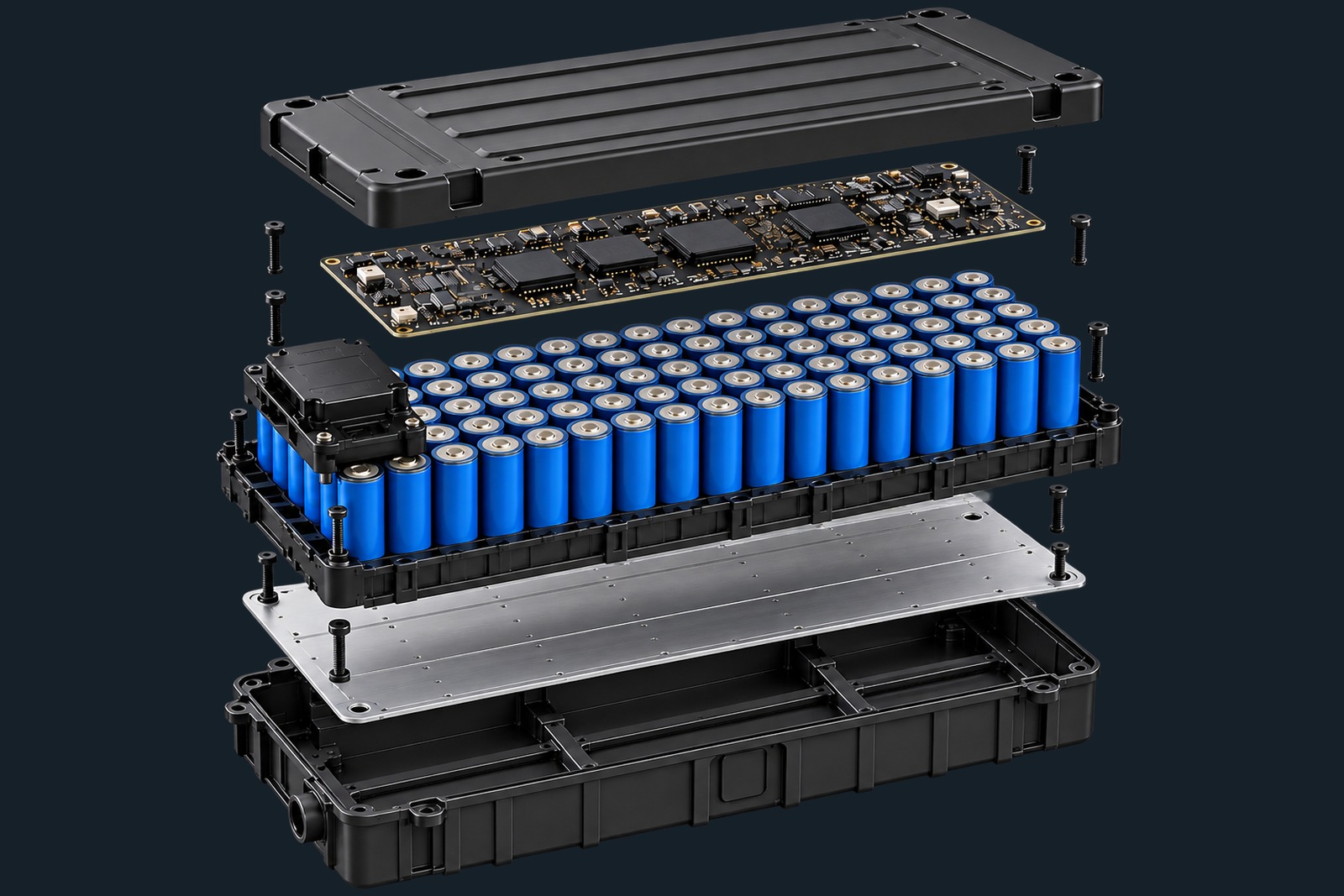
When choosing an eFoil, people often compare the board, the motor, the performance or the price. Yet one essential element is sometimes overlooked: the battery.
Weight, capacity, range, voltage… the differences between manufacturers are significant and will affect your experience, both on the water and when transporting your gear.
Since each manufacturer uses its own system, the battery deserves to be compared before choosing your eFoil.
The 4 numbers you need to know
Capacity (Wh)
This is the amount of energy stored in the battery. Think of it like the size of a fuel tank: the higher the Wh figure, the more energy the battery carries.
But beware: more capacity doesn't automatically mean more range, since that also depends on the eFoil's efficiency, the rider's weight, the wing, the speed and the conditions.
Weight (kg)
This is what you'll actually have to carry.
Long-range batteries on today's eFoils can weigh anywhere from 11 kg to over 18 kg. On a spec sheet, a few kilos of difference may look trivial. On the sand, or when handling the battery before and after every session, the difference is very real.
This weight isn't just about transport: the heavier the battery, the more energy the eFoil needs to carry it and generate the required lift. That extra mass increases consumption and reduces real-world range, for the same capacity.
Voltage (V)
This is essentially the electrical system's "pressure". You'll often see "14S" or "18S": this figure refers to the number of cells stacked in series inside the battery, and the higher it is, the higher the voltage (14S ≈ 50 V, 18S ≈ 65 V).
At equal power, higher voltage allows the system to run on less current, which can reduce certain electrical losses. It also makes the motor snappier on acceleration, for a more responsive feel underfoot.
Voltage alone doesn't determine performance, though: the motor, controller, propeller and tuning all play an essential role too.
Energy density (Wh/kg)
This is probably one of the most interesting figures for comparing batteries.
It simply shows how much energy is stored per kilogram of battery:
Energy density = capacity ÷ weight
The higher this figure, the more energy the battery carries for less weight, and therefore less weight-related consumption, for more range.
It's also a sign of quality: a high energy density reflects careful engineering (high-performance cells, optimised architecture, well-managed thermals) and suggests a more reliable, longer-lasting battery.
eFoil battery comparison in 2026
Here are the long-range batteries offered by several major brands on the market:
| Battery | Capacity | Voltage | Weight | Claimed range* | Wh/kg |
|---|---|---|---|---|---|
| Aerofoils Endurance | 2,230 Wh | ≈50.4 V | ≈13 kg | up to 120 min | ≈172 |
| PWRFOIL PWRCELL 'L' | 1,944 Wh | 64.8 V | 11.9 kg | up to 120 min | 163 |
| Lift Gen5 Full Range | 2,200 Wh | ≈50 V | 13.9 kg | up to 90 min | ≈158 |
| Awake Flex Battery XR 4 | ≈2,850 Wh** | ≈50 V | 18.5 kg | up to 120 min | ≈154 |
| Fliteboard Flitecell Explore | ≈2,100 Wh | ≈52 V | 14.5 kg | up to 150 min | ≈145 |
| Waydoo Powerflight 2300 | 2,300 Wh | 50.4 V | ≈17.7 kg | up to 135 min | ≈130 |
*Claimed ranges aren't directly comparable: rider weight, wing, speed, conditions and test protocols can differ between manufacturers. They should be considered rough estimates.
**Awake doesn't officially disclose the XR 4's capacity; value estimated from the previous generation (≈2.85 kWh).
Bigger doesn't necessarily mean better
This is the main takeaway from this comparison.
Take two batteries: 2,300 Wh for 17.7 kg versus 1,944 Wh for 11.9 kg.
The first carries around 18% more energy, but weighs nearly 50% more.
This is where energy density becomes particularly interesting. A large capacity can be worth it if you're after maximum range. Conversely, a lighter battery with excellent energy density can offer a better compromise for regular use.
And what about real-world range?
This is probably the figure to take with the most caution. Range varies enormously depending on the rider's weight, the wing used, speed, sailing conditions, the efficiency of the motor and propeller, and the rider's level.
Two people using exactly the same eFoil can therefore get noticeably different ranges. The figures given by manufacturers are useful as a rough guide, but shouldn't be compared down to the minute.
What to remember before choosing your eFoil
Don't look only at the claimed capacity or range. Compare above all the capacity, the weight, the energy density and the battery's overall architecture.
A difference of a few kilos might seem minor at the time of purchase, but it will be there every session. The battery isn't just an accessory: it's an integral part of the experience you'll have with your eFoil.
Want to try before you choose?
At Efoil Mauritius, official PWRFOIL reseller in Mauritius, we let you discover eFoiling directly on the water during guided sessions in the North of Mauritius, and better understand the differences between equipment.
Contact us to try an eFoil →